PyCon US - A story in 3 acts
PyCon US has ended. I was unsure whether to write a short post or a long one. I finally opted for a more detailed post because: I want to be able to reread it later and remember everything that happened during the event, and because I think that way others can better imagine the event. So much happened in such a short time! I find it hard to believe it was only 3 days, and not an entire week.
Friday
On the first day, walking through the convention center, I was surprised by the size of the event. The rooms are gigantic. Truly enormous. My hotel -expensive but sponsored by the PSF- had a direct connection to the event center, which was very convenient.
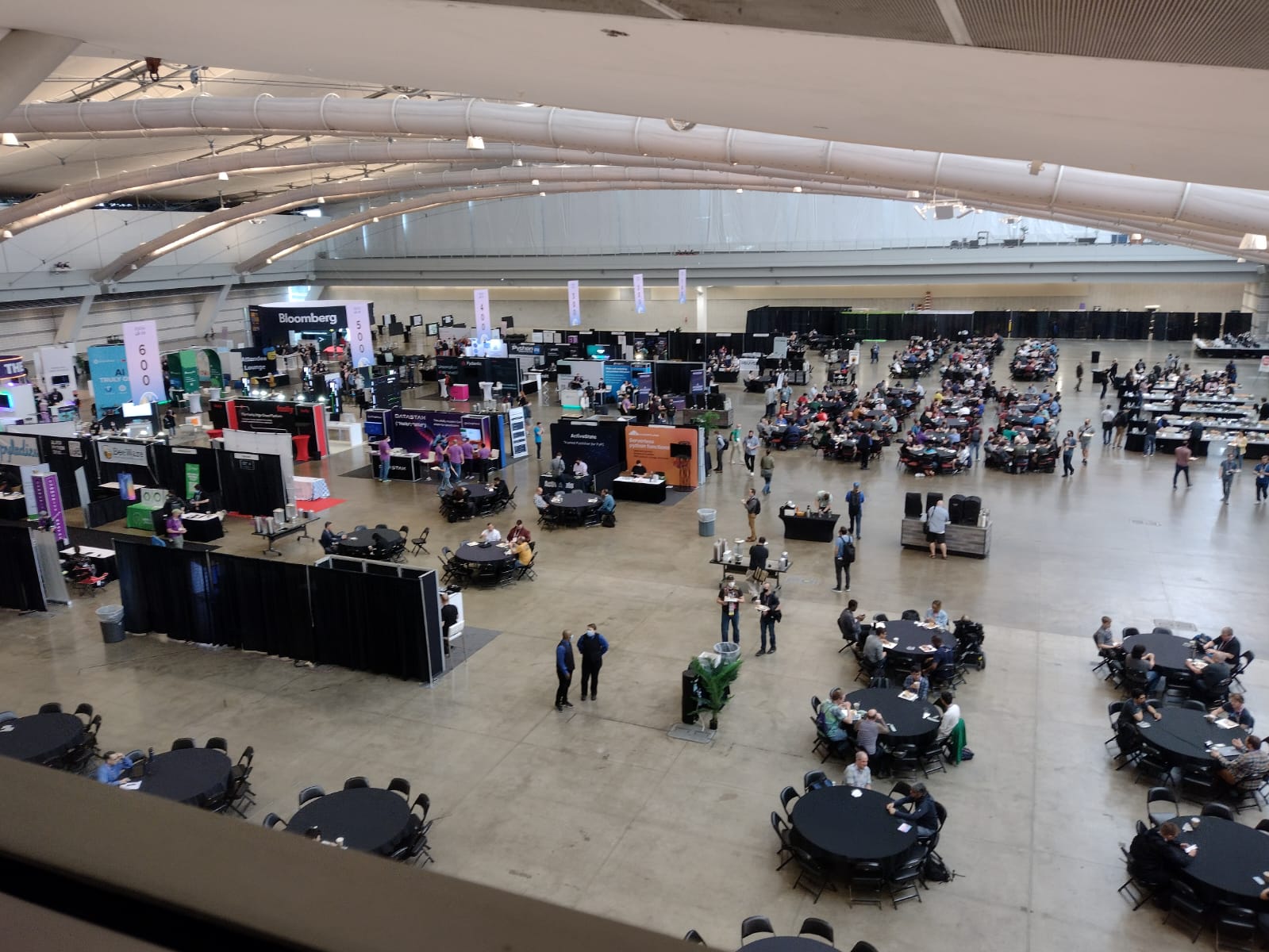
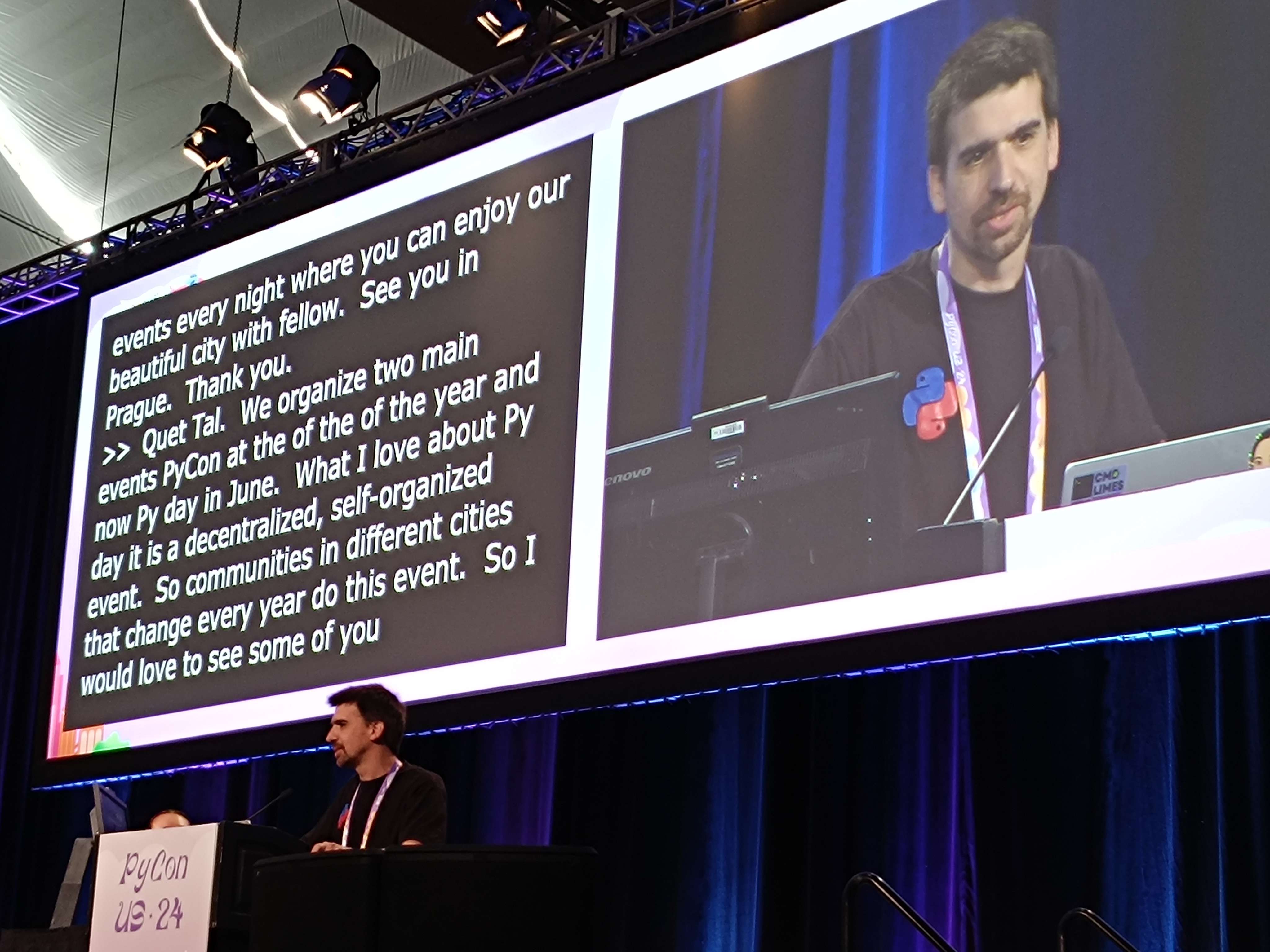
In the photo, you can see the main space on the 2nd floor, which had posters, booths from companies, startups, and communities, and the food service area. On the same floor was the main hall where the keynotes and lightning talks took place. On the 3rd floor were the rooms for the talks and the charlas. Yes, there is a difference. There were four rooms for talks (talks in English) and one room for charlas (talks in Spanish). Additionally, on the 3rd floor, there was a green room, a space for speakers to test their connections and practice. As a speaker, I had the right to go there whenever I wanted, which was convenient for getting coffee when it had run out elsewhere.
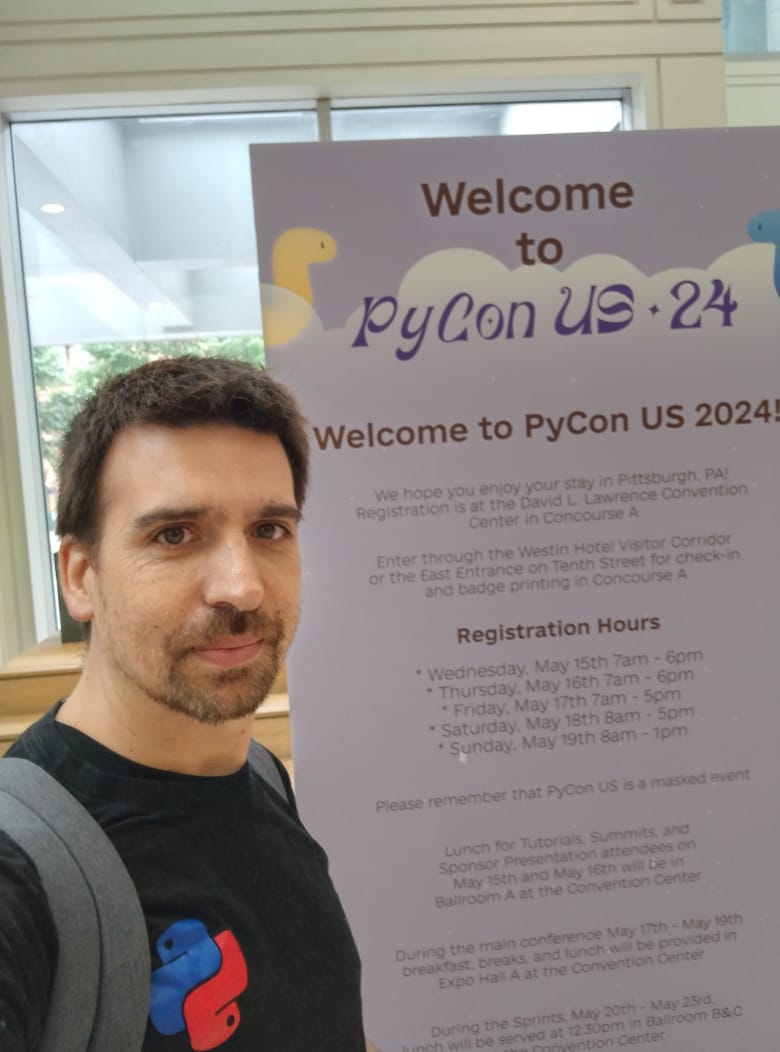
In the morning, I registered for the event and got my badge with my name, stickers, and a t-shirt. The t-shirt was way too small for me (L fitted << regular M), but fortunately, I was able to exchange it on Sunday. Even during breakfast, it was clear this wouldn’t be just any event: in the distance, I saw Guido van Rossum, the very creator of Python. Yes, he’s also human. Incredible. I resisted the urge to take a picture because I had already been warned not to paparazzi him.
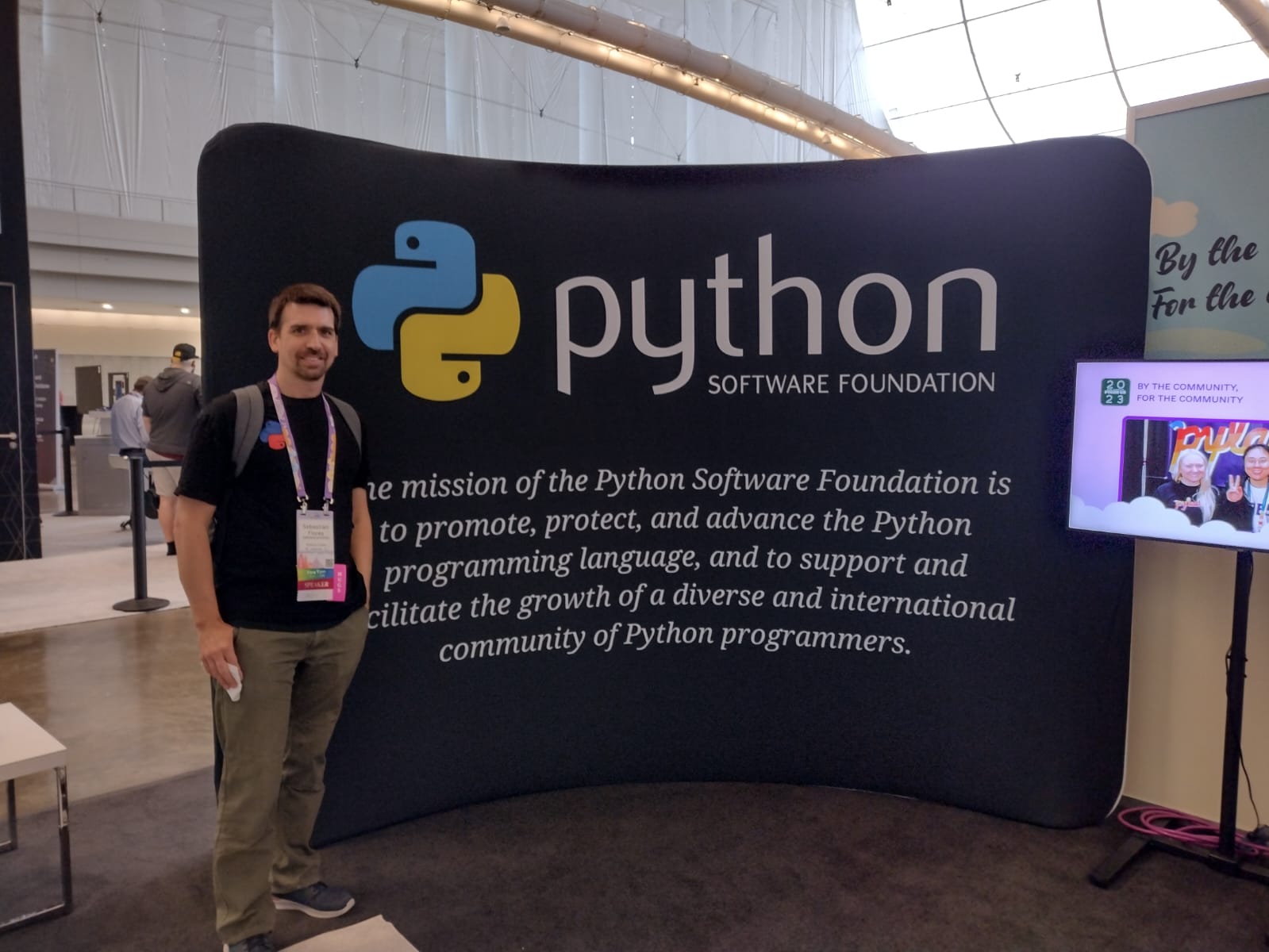
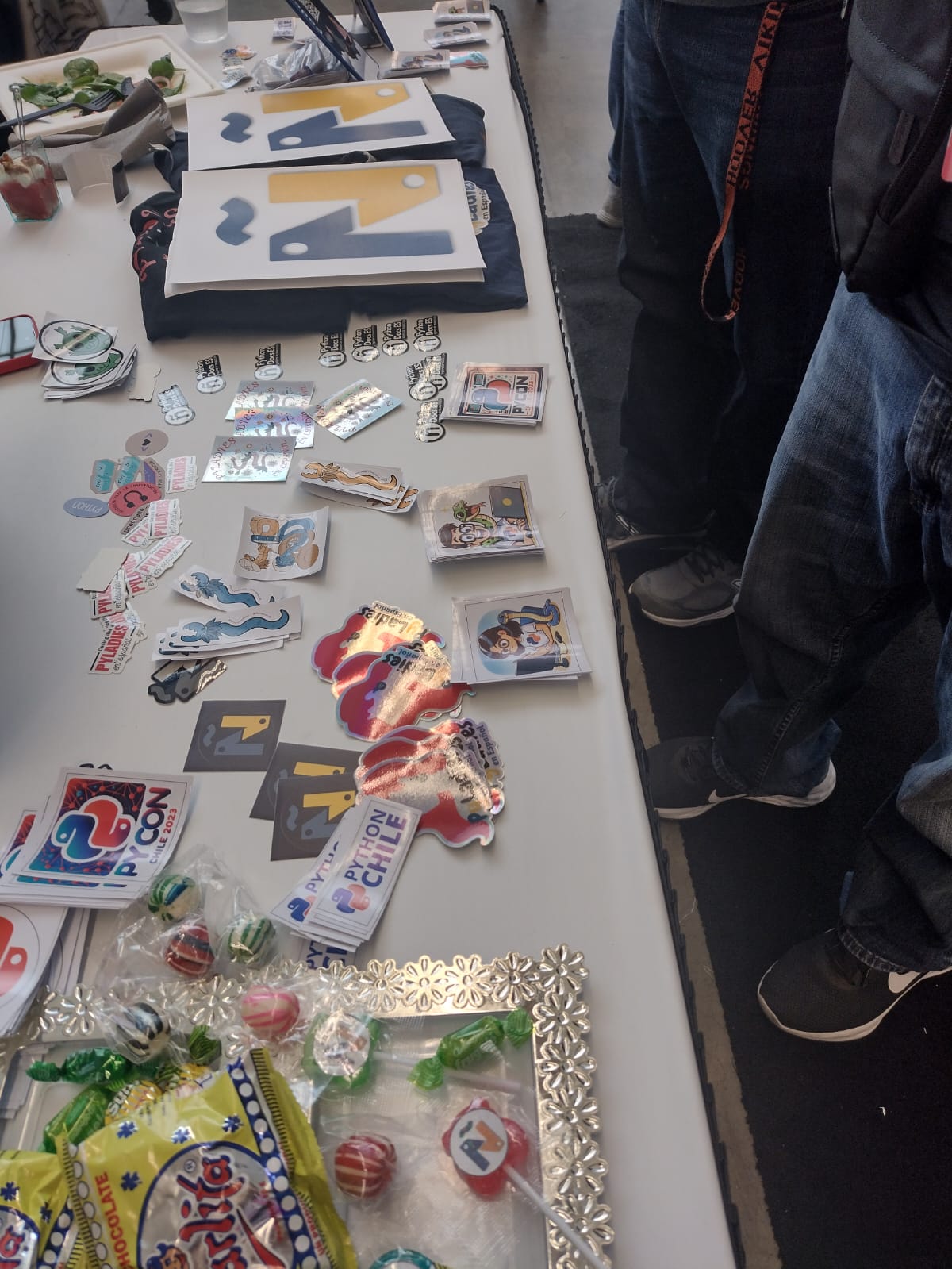
In the morning, I met up with Denny and Cristián, whom I have talked to and collaborated with online through Python Chile for years but had never met in person. And it felt like we already knew each other and had always seen each other. I was at the Spanish Python booth, meeting other Python enthusiasts, giving out stickers, and receiving stickers. I also attended the PyCon inauguration and the first keynote.
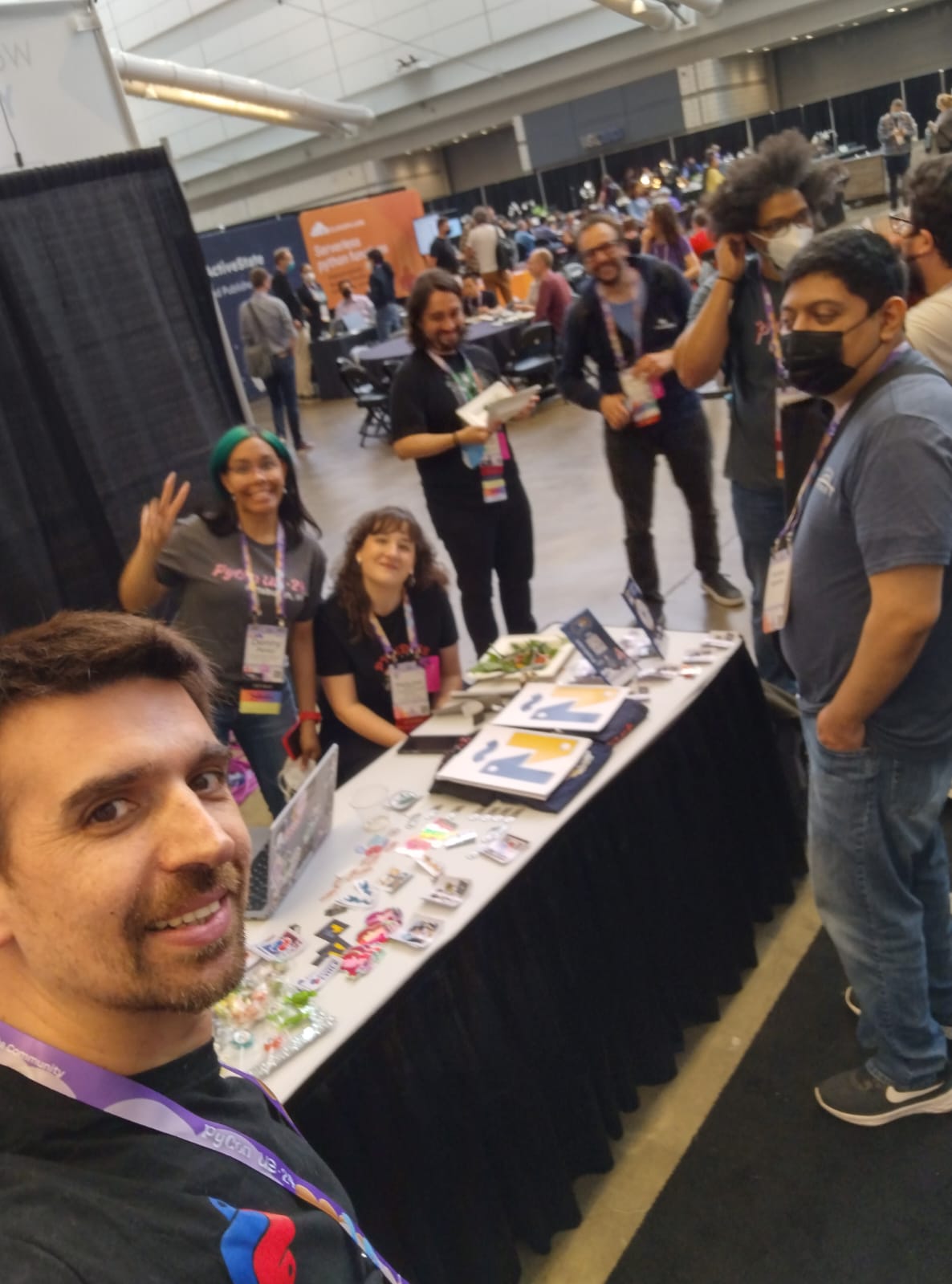
I also stopped by the Streamlit booth and took the opportunity to greet Chanin, Tony, Cristine, Ted, and Krista, whom I had only known virtually. I was surprised by the warmth with which they greeted me with me. I would have liked to talk more with them and express my gratitude, but I think the mix of fatigue, lack of sleep, and a constant state of amazement limited my ability to express myself in English. It was only on Saturday, after my talk, that I managed to relax and truly enjoy it.
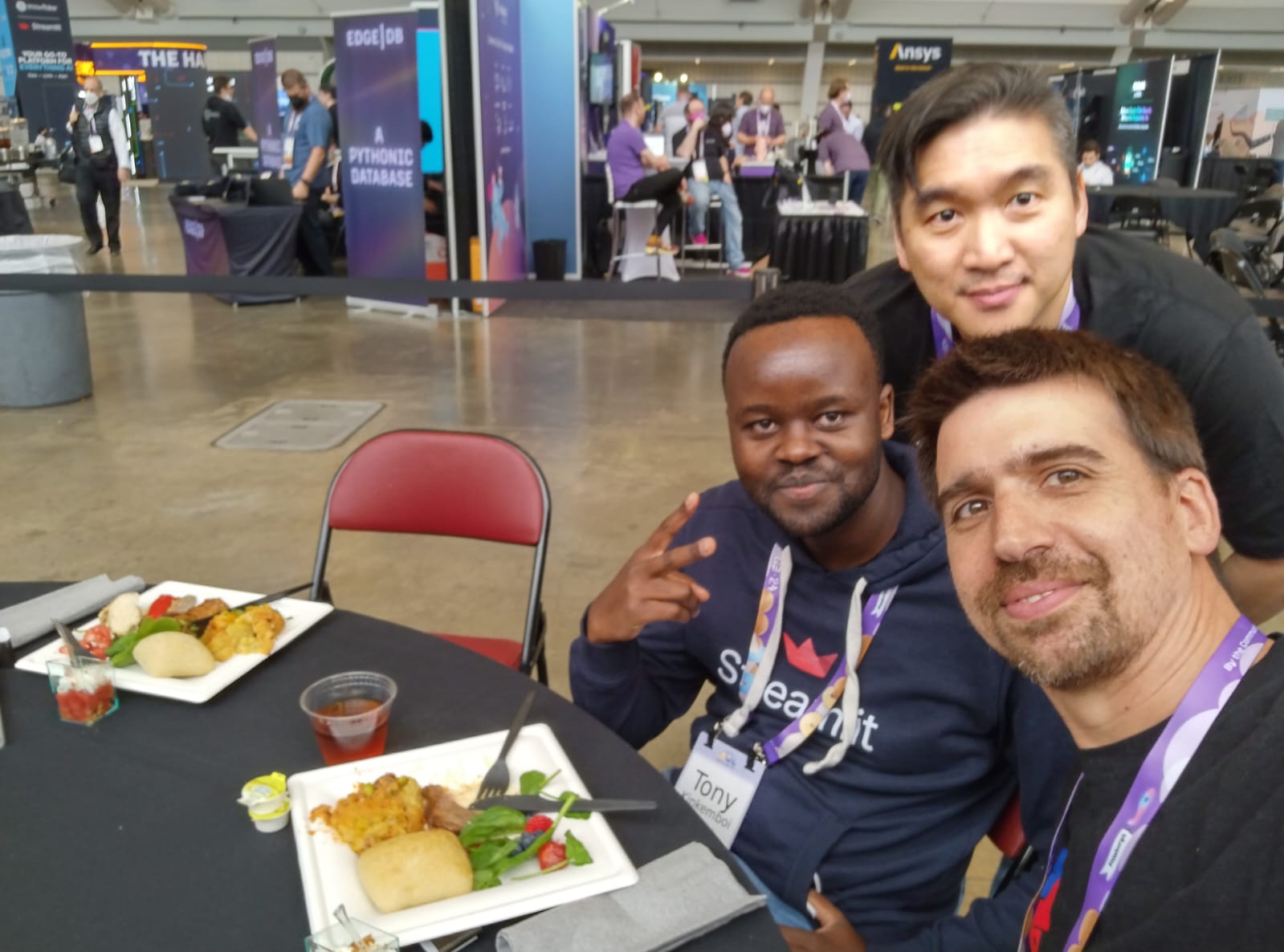
Chanin - Data Prof - interviewed me trying to get some coherent thoughts.
After the keynote, I split my time between wandering around the stands, collecting t-shirts and stickers, and attending some talks. There was a stand with puzzles to solve and t-shirts that I liked, but it was always very crowded, so I decided to try again the next day.
During the lightning talks, around 6 pm, I realized I was mentally and emotionally exhausted. I decided to go for a walk to relax and get to know the surroundings a bit, and to buy something for dinner. I realized I needed to rest to be able to give a good presentation the next day. I ended up having dinner at the hotel despite walking around looking for a better option (3 mini-burgers). Back in the room, I rehearsed and worked on the last changes to the presentation from 8 to 11 pm. My speaker notes had every word I needed to say and even the moment to click/next on the presentation. I collapsed into bed and slept deeply.
Saturday
The day started early, with a light breakfast due to my pre-presentation nerves. I went to Simon Willison’s keynote, which was incredible and I will recommend to everyone as soon as it’s available on YouTube. Simon explains how LLMs work in a didactic and fun way, highlighting all their limitations but also the amazing things they allow us to do (which weren’t possible before).
At noon, I gave my talk in English in a huge, packed room. To be honest, I was incredibly nervous. Just before going on stage, I realized that I didn’t have a single line of Python in my presentation! Fortunately, it was too late to change anything. I knew I had prepared good material and notes to support me.
The reception has been overwhelmingly positive. I think storytelling really connects with people because it is a very intuitive and powerful concept. We all want to improve the way we communicate our ideas. Hearing people say: “Thanks for pointing out library X, I love it” or “I wanted to keep learning, so I bought book Y” makes me very happy.
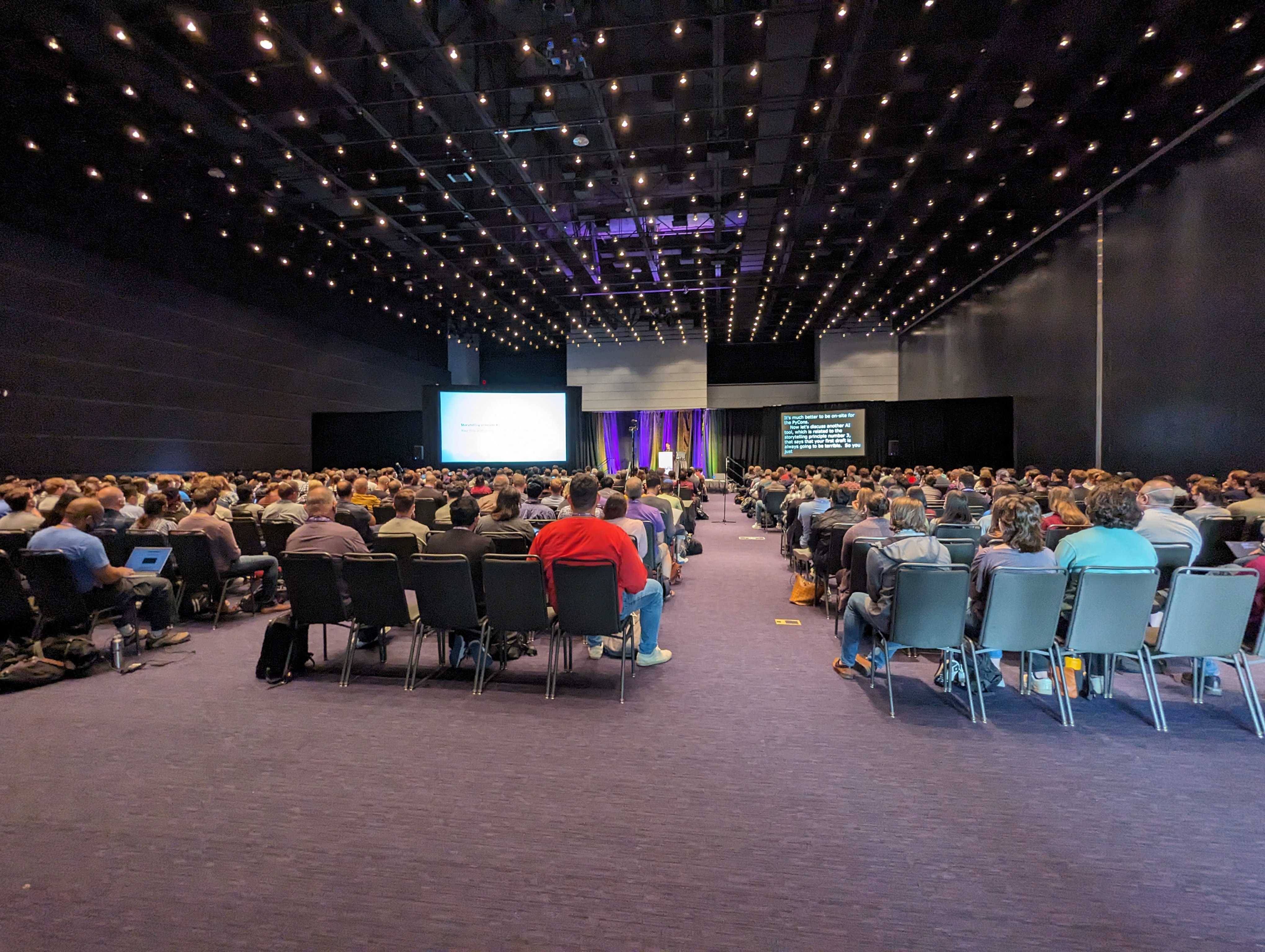
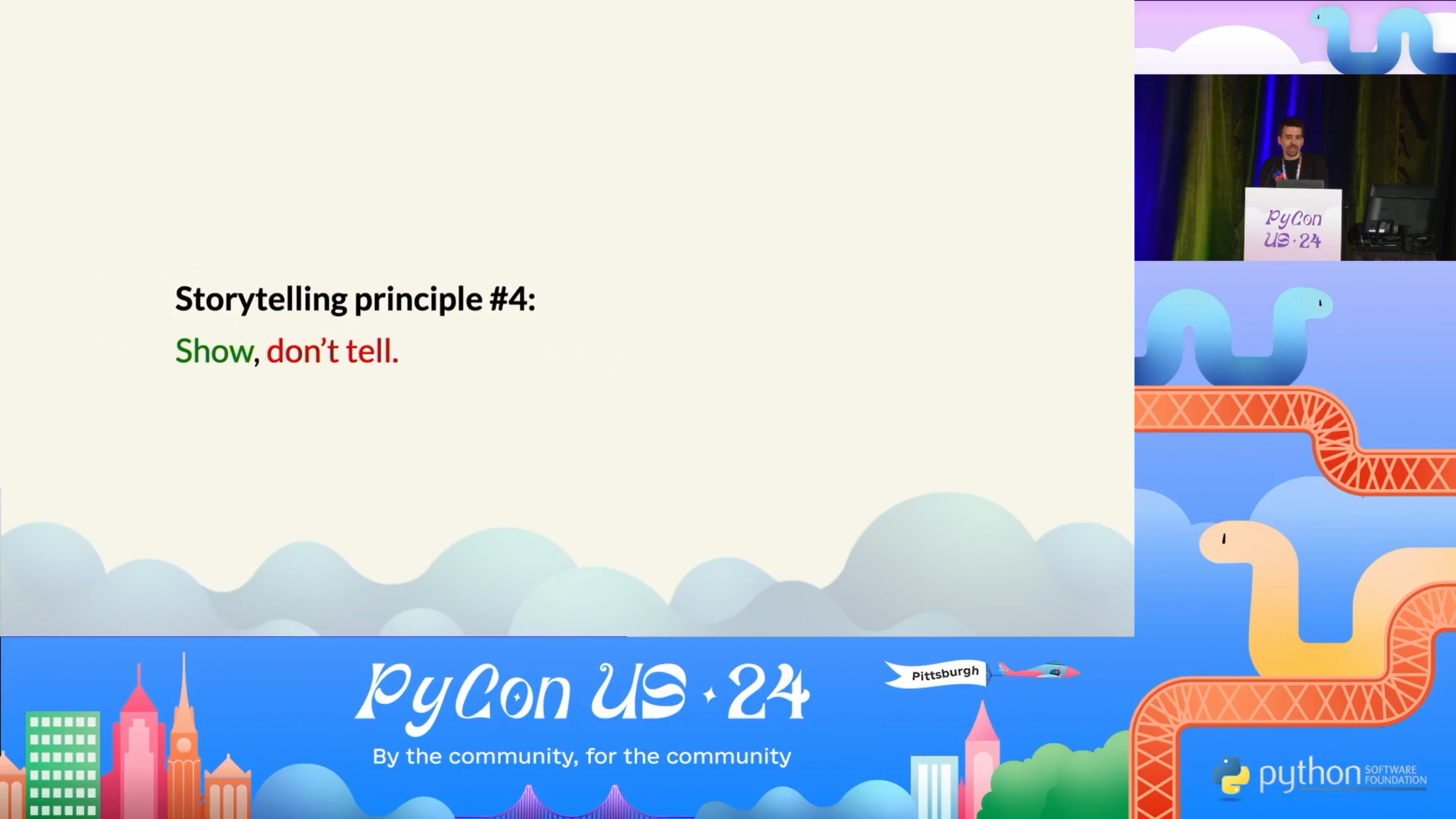
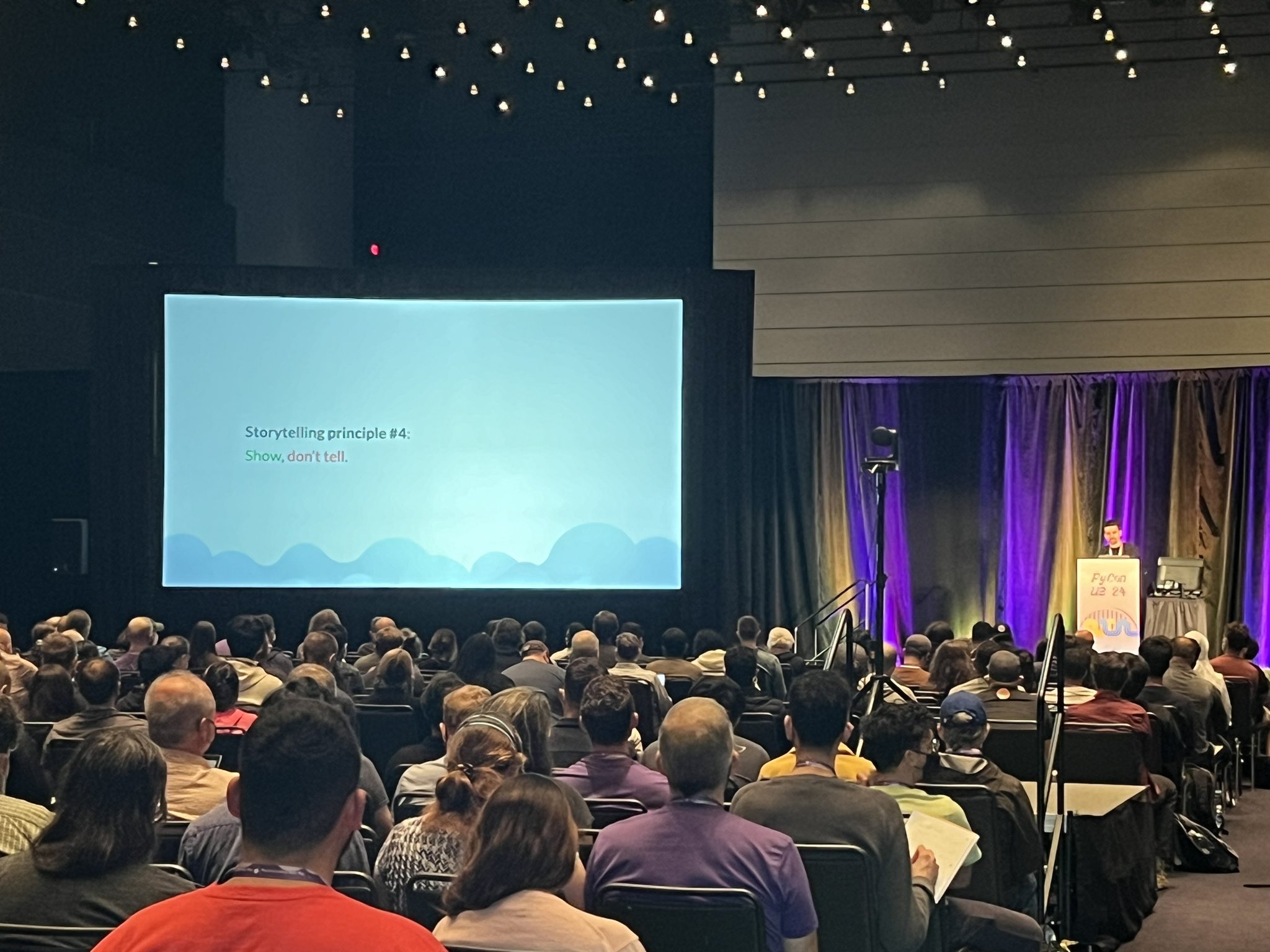
In the presentation, I included a survey, which over 30 people responded to. The feedback is overwhelmingly positive, and the few suggestions for improvement are:
- I need to smile more
- I need to modulate better and use more tones, not speak so flatly
- The ending was a bit abrupt
- The agenda (table of contents) can be used to generate more interest
After the talk, I took the opportunity to relax and attend some presentations. I also chatted with some people who approached me to comment on my presentation, exchange book recommendations, or simply introduce themselves.
Do you remember the stand with the t-shirts I wanted? In the afternoon, I stopped by and it was almost empty. There were three different challenges, and by solving each one, you would get a four-digit code that you could use to open a lock on a box. While they were explaining the rules, I half-jokingly asked if it was allowed to open the lock without solving the puzzle, and they looked at me like, “Can you really do that?” So I showed them that it’s actually super easy to hack one of those small locks (I had seen a tutorial a few years ago) and managed to open the lock in about a minute. They laughed a lot and gave me the t-shirt anyway (I never got to learn what the puzzles were about). I felt so “street smart” haha.
Like the previous day, I alternated between attending talks, visiting the stands, and networking. I met a lot of interesting people. At lunch, I met a Duolingo engineer who worked in Pittsburgh and a recent graduate who was just starting to learn Python. The sheer diversity of profiles and knowledge. And I love that there is no prejudice about your level of knowledge, because there is so much to learn that we are all newbies in some aspect or library of Python. We are all always learning something.
I went back to the hotel to drop off my computer and dressed up for the PyLadies auction. The “PyLadies auction” is very fun and noisy, but also elegant and intimate. A multi-course menu with very good food is served. Meanwhile, various items donated by people from the community are auctioned off. Python Chile had donated one of the keepsakes from PyCon Chile 2023 (the elevator with a crank), which ended up selling for 425 dollars - I only hoped it would go for more than 100 dollars. There were 44 items up for auction, including: a giant plush snake (3 or 4 meters), a suitcase with the logos of all the PyLadies chapters around the world, and a cuckoo clock with a Python theme. In total, more than 60,000 dollars were raised.
After the PyLadies event, people from various Spanish-speaking communities and I went out for beers and to celebrate Cristián’s birthday. I think I went back to the hotel around 2 am.
Sunday
I woke up early because I had committed to presenting a slide about PyDay Chile during the lightning talks at 8 am. I enjoyed starting by saying, “¿Que tal, festival?” which surely only forty-something Chileans will understand as a reference.
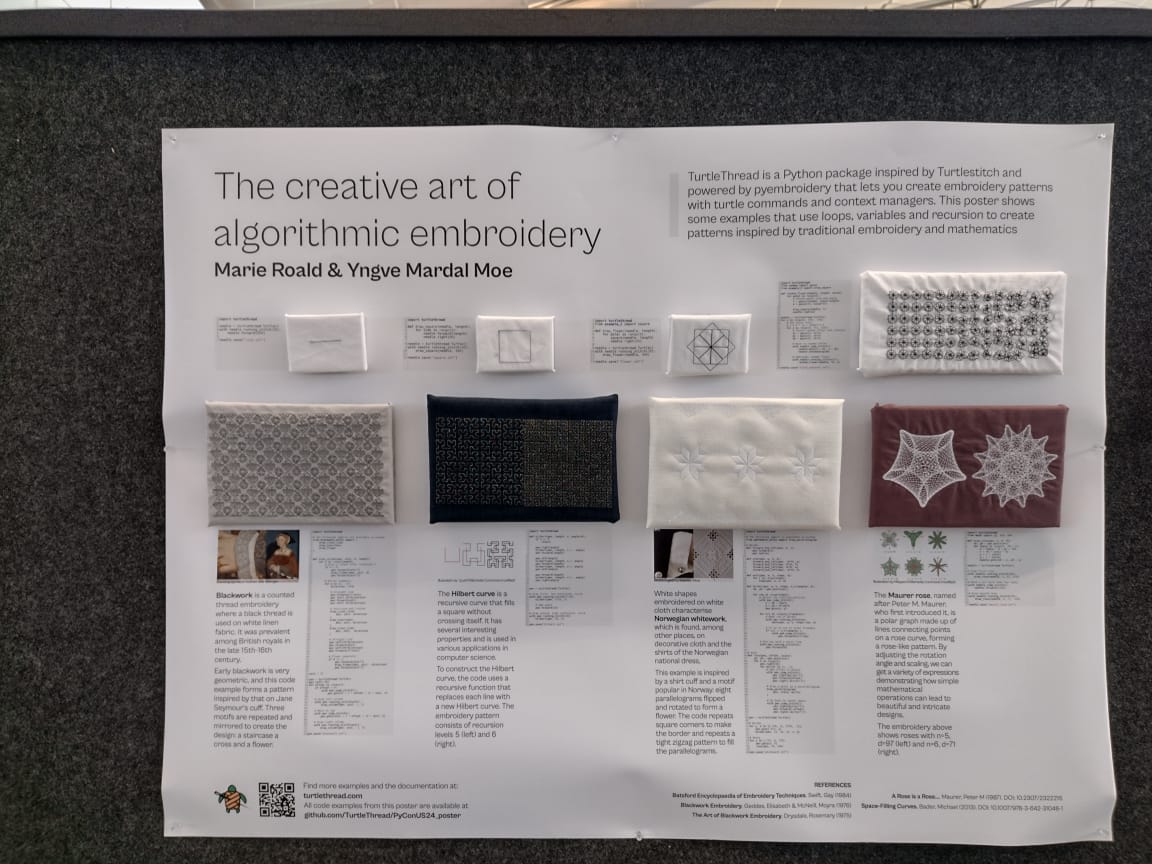
By Sunday, there were fewer people at the event, with many walking around with their suitcases. The company, startup, and community booths had already been removed, and the focus was on the job fair and posters. I found the work on “algorithmic embroidery” notable for its artistic and delicate nature. It’s incredible that such things can be done, linking the ethereal nature of a programming language with the concrete reality of fabric and thread.
In the morning, I attended some talks, and in the afternoon, I organized an Open Space called “Data Storytelling 2: Revenge of the Audience” that I had proposed. I wasn’t familiar with the Open Space format, and it’s super powerful. In addition to the scheduled talks, about 10 rooms of various sizes (60 to 100 people) are available to attendees, and depending on the mood and interest, “collaboration spaces” are proposed, which can take any form or intention.
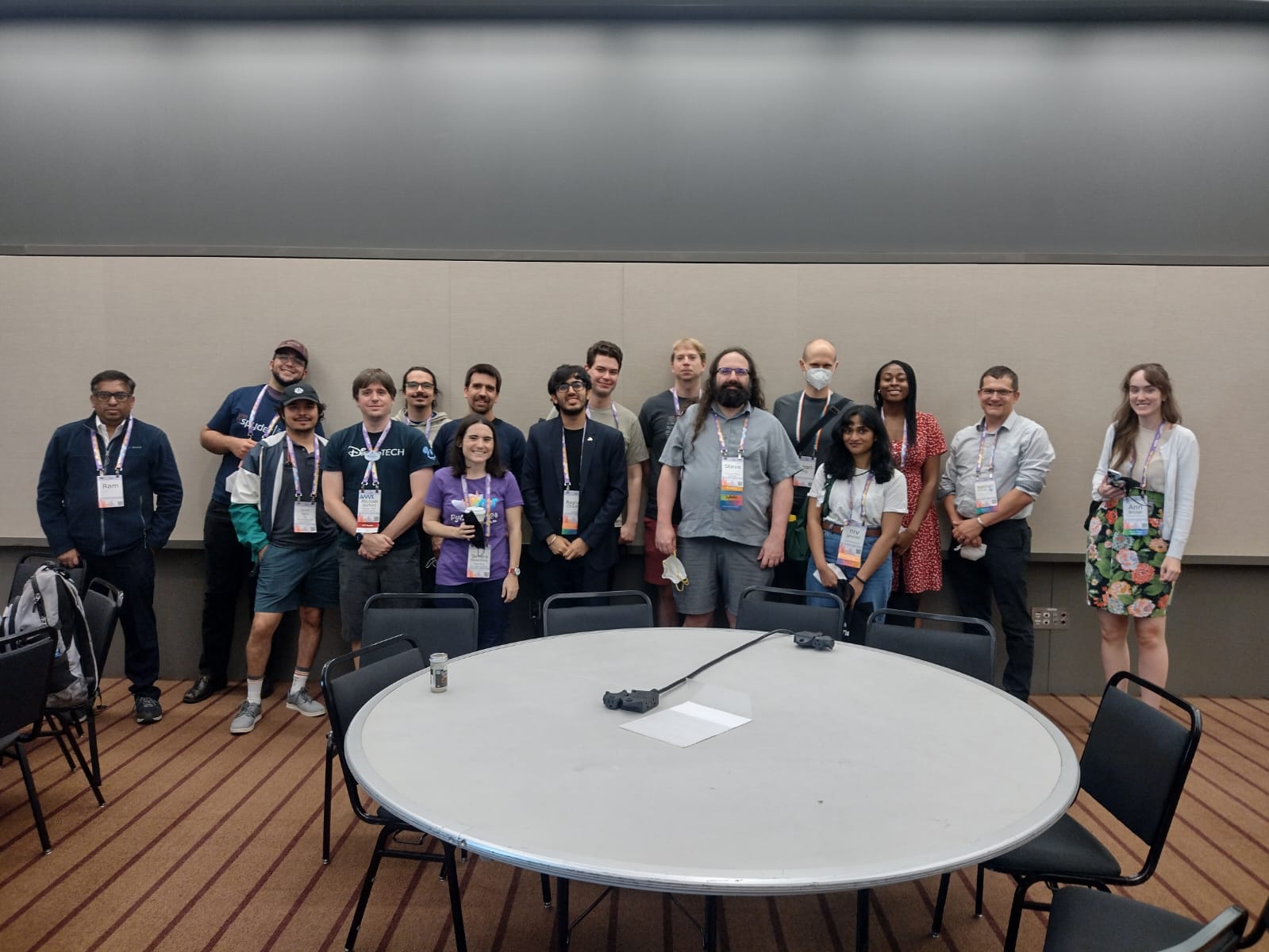
Many more people attended the Data Storytelling Open Space than I had expected; I think there were about 15 of us. We talked about different topics:
- Favorite data visualization libraries.
- Opinions on pie charts and other graphs.
- Using renpy to make a presentation that is like a conversation/manga.
- Using the manim library to make mathematical animation graphics.
- Book recommendations: Creativity Inc, which talks about storytelling at Pixar.
One of the most interesting questions was, “What will happen in the future when generative AI can create a movie, comic, or book from a prompt?” This will mean that as a society we won’t have the same references, and that they might not be transferable.
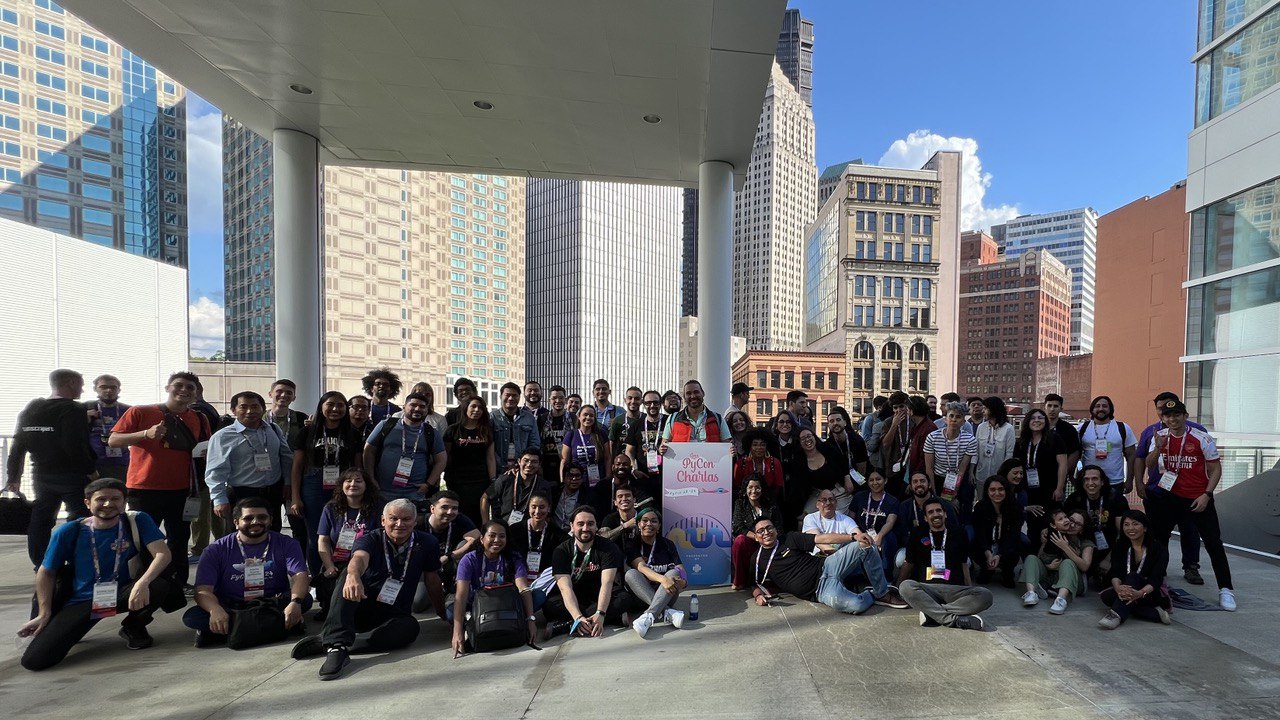
We also took photos of the Spanish-speaking Python community.
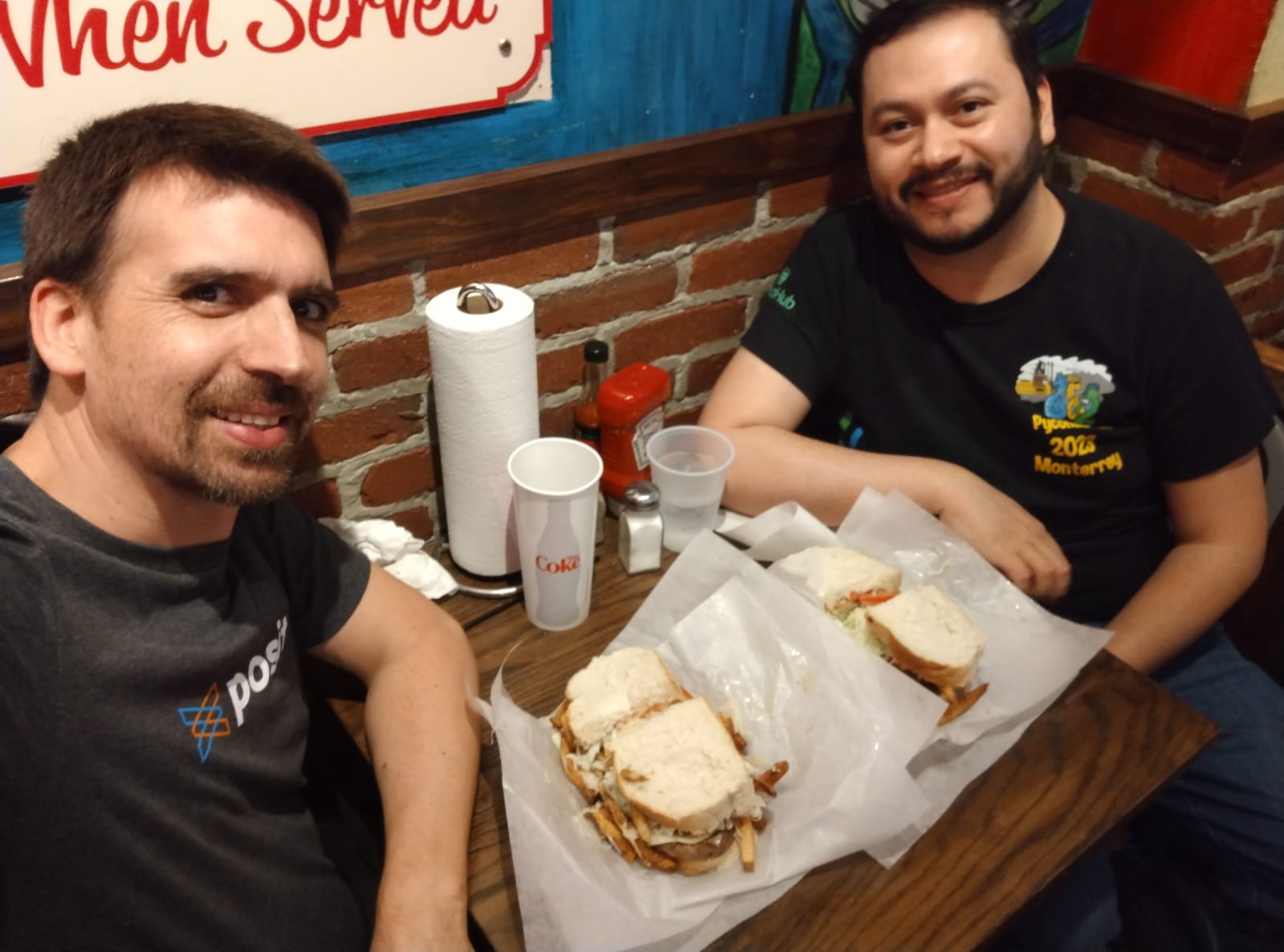
Armando and I went to dinner at Primanti Bros, a sandwich shop in Pittsburgh that is supposed to be extraordinary but pales in comparison to the sandwiches from Chile, Peru, or Argentina.
Afterwards, we met up with the rest of the Pythonistas at a nearby brewery. There, we talked, toasted until glasses broke, and gave away the last stickers, plush toys, and t-shirts. One Pythonista was looking from afar with a face that said, “I want a sticker too,” so I invited him over. He took some stickers for his daughter, and we started chatting. He was American but spoke Japanese and was very close with the Python Japan group, whom he introduced me to, and he ended up buying me some beers. Two stickers for two beers, definitely the best deal I’ve ever made! Hahaha. I was surprised at how easy it was to meet people and discuss technical topics when I usually find it much harder to talk to strangers or network.
And so, the time came to pack my bags. I decorated my suitcase with NumFOCUS stickers and headed to the airport, thinking it was true, that I had accomplished it. My dream of being at a PyCon US and presenting a talk in English. That when you think big and work from and for a community, amazing things can be achieved. And that I have been very fortunate to be able to get here, and that also means a huge responsibility to support others in daring to come as well.