Burnout — experience and learning
Disclaimer:
These are personal notes from my readings on the subject. I hope they can be useful to someone else.
My summary: don’t hide it, on the contrary, talk about it, get opinions and understand that other people also suffer it or have suffered it in the past.
“Burnout” — work fatigue or extreme exhaustion — is characterized by presenting some of the following feelings: * A permanent feeling of exhaustion, failure. * Difficulty concentrating, low productivity and low self-esteem. * Fantasy of escape and even suicide. * Headache, tachycardia or insomnia. * Apathy, boredom, impatience or irritability.
First of all, you have to let go of the shame and stigma. Having burnout does not (necessarily) mean not wanting or not appreciating your work. It is a medical condition of physical and mental exhaustion. Recognizing burnout is the first step to regaining control and interest in your life.
It is said to affect “Type A” people (competitive, detail-oriented and workaholics) more than “Type B” people (relaxed and non-neurotic)
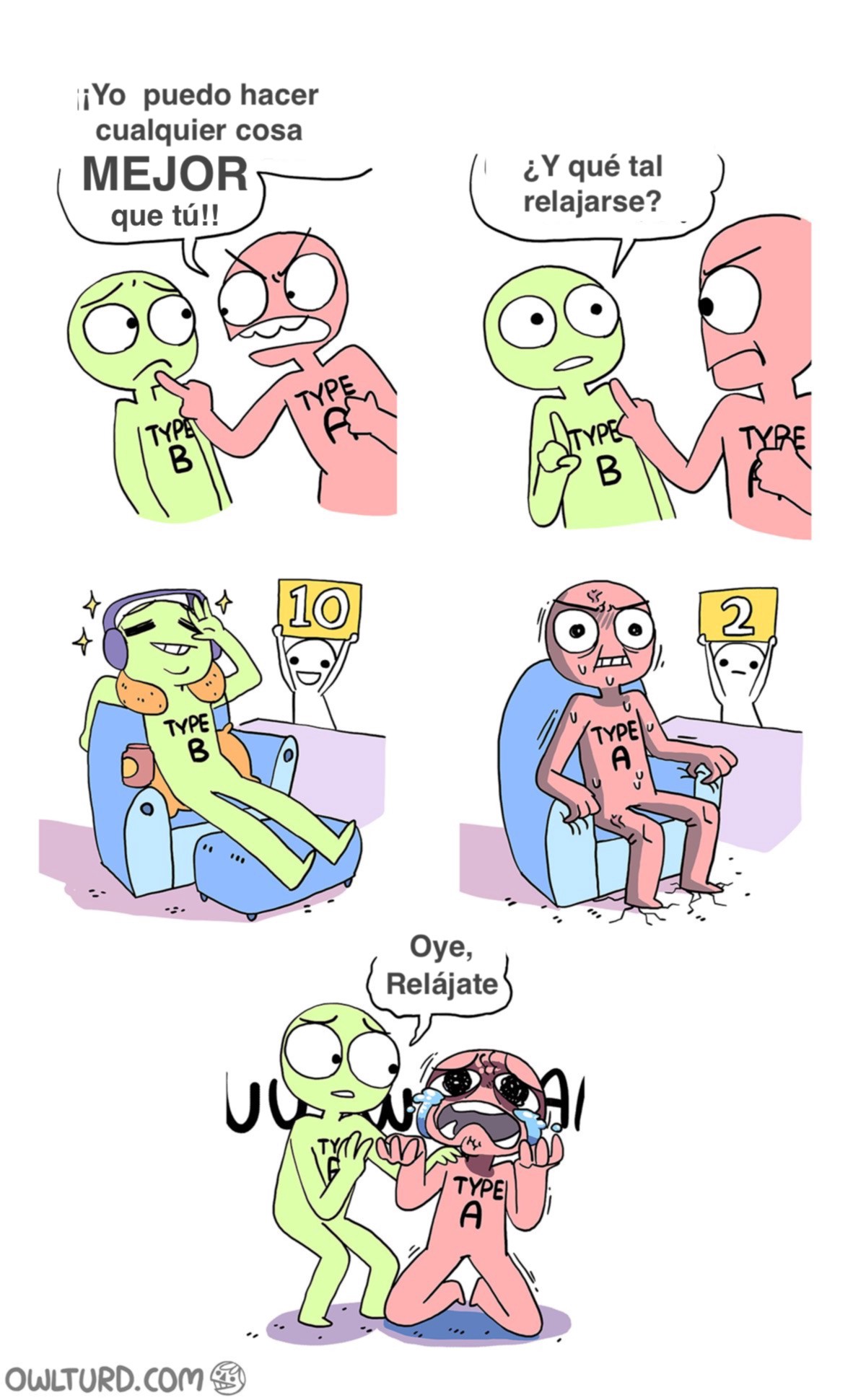
There are certain dimensions to review to reduce the impact of burnout:
- Diet: reduce toxins such as sugar, fats or alcohol. It is usually very difficult because precisely those toxins give us pleasure and tend to be (short-term) escape routes.
- Sleep: You need to sleep to recover in order to have energy and clarity. It is simply a physiological matter. You have to plan schedules to get deep and restorative sleep.
- Body: burnout is a condition that feeds on a disconnection with the body and the physical world, from spending too much time on more mental tasks. Exercise and meditation are 2 tools to connect with your body and with the present moment. It is not necessary to allocate large amounts of time: HIIT workouts and 5 or 10 minute meditations can be integrated into the routine permanently without much impact.
- Attunement and communication: recognizing the signs and the level of stress allows you to seek support and communicate it, without shame. Putting burnout into words is simply liberating, and provides containment and relief.
- Mindset: maintaining a positive mindset about our life and accepting personal responsibility for the situation can help us.
In my case, burnout comes from paying little attention to the signs and excessive screen time (laptop, smartphone, television), amplified by quarantine stress. To counteract it, I reduced from four to a single cup of bean coffee a day, in addition to making sure to sleep at least 7 or ideally 8 hours a day. I re-established exercise and meditation routines, and reduced the amount of time in front of screens. I stopped being available at any hour, trying to prioritize tasks and meetings on the topics that are most interesting to me. And perhaps most importantly, I stopped hiding it, making a point of checking whether other people might also be suffering from it and assuming that the responsibility for my health is only mine and that I cannot expect improvements without making changes.
Some readings: * The Opposite of Burnout — Liz Garrett (85 pages) short and precise. Specific activities to carry out, with good advice. Recommended. * Burnout to Breakthrough — Eileen McDargh (115 pages) It has short chapters but I didn’t like it as much. There were too many exercises and questions, so the reading flow was very interrupted.